How to Choose the Right Luxury Home Builder for Waterfront Projects

A luxury waterfront home is never just a larger version of a standard custom home. The site is more demanding, the permitting is more layered, and every design choice has to work with light, slope, access, weather, privacy, and the view.
That makes the builder decision one of the most important choices in the entire project.
The right builder does more than manage construction. They help protect the vision, anticipate problems before they become expensive, and guide the work through local rules that may affect what can be built, where it can sit, and how the land can be disturbed.
For waterfront properties, that experience matters early. It affects site planning, budgeting, schedule expectations, foundation decisions, drainage, erosion control, dock or shoreline access, and even window placement. A builder who understands this type of construction can help turn a beautiful but complicated property into a home that feels natural on the land.
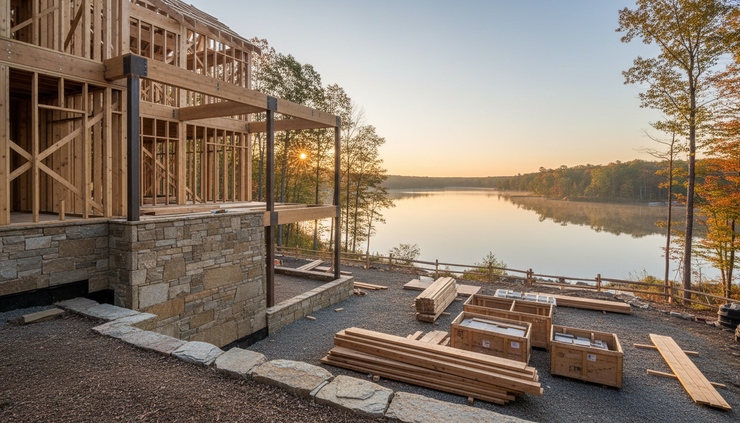
Start with credentials that match the complexity of the project
Credentials are not just paperwork. They show whether a builder is equipped to handle the scale, risk, and detail of a luxury custom home.
Begin with the basics. Confirm that the builder holds the required state and local licenses for residential construction. Ask about insurance coverage, including general liability and workers’ compensation. For a substantial waterfront project, insurance is not a minor detail. It protects the homeowner, the builder, and the trades working on the site.
Then look beyond minimum requirements.
A luxury builder should have a clear process for preconstruction planning, estimating, scheduling, quality control, and change management. Ask how they select subcontractors and suppliers. Ask whether they work with the same trusted trades often or assemble a new team for every project. Consistent trade relationships can make a major difference in craftsmanship and communication.
A strong builder should also be comfortable working with architects, designers, engineers, surveyors, landscape teams, and permitting consultants. Waterfront construction often requires coordination with several specialists. If the builder is not used to that kind of collaboration, the project can quickly become disjointed.
When evaluating credentials, ask questions such as:
How many custom waterfront or complex-site homes have you completed?
Are you licensed and insured for this scope of work?
Who will supervise the project day to day?
What type of written estimate and construction agreement do you provide?
How do you handle changes after construction begins?
What systems do you use to track schedule, selections, allowances, and approvals?
Do you have experience with shoreline, slope, drainage, or access challenges?
The goal is not to collect a perfect answer to every question. The goal is to understand whether the builder has a mature, repeatable way of managing complex work.
A luxury builder should be able to explain their process clearly. If answers feel vague during the interview stage, communication will rarely improve once the project is underway.
Choose a builder who understands waterfront ordinances and site conditions
Local ordinances can shape a waterfront home as much as the design itself. Setbacks, height restrictions, impervious surface limits, shoreline buffers, tree removal rules, septic requirements, stormwater controls, floodplain concerns, and steep-slope regulations may all affect the project.
These rules vary widely by municipality, county, lake association, coastal authority, or environmental agency. A design that works on one waterfront lot may not be allowed on a similar property a few miles away.
That is why the type of construction matters. Building on a flat inland parcel is different from building into a hillside above a lake. Renovating an existing waterfront home is different from tearing down and rebuilding. A home with a dock, boathouse, retaining wall, beach access, or long driveway may involve additional review.
A builder with relevant site experience can help the homeowner understand these issues before major design commitments are made. This can prevent redesigns, permitting delays, and budget shocks.
Jensen Builders focuses on waterfront homes, which gives homeowners an advantage on sites where the land itself adds complexity. The benefits are practical:
Shoreline and steep-slope permitting experience Direct, hands-on work with the challenges that often come with lakeside, coastal, or sloped properties.
Established municipal relationships Familiarity with local municipalities and permitting authorities can make the review process clearer and more predictable.
A design and build process centered on the site Waterfront homes should make the most of views, daylight, outdoor living, privacy, and access to the water.
Fewer costly surprises Prior experience with these site conditions helps the builder identify risks earlier, before they disrupt the budget or schedule.
This kind of experience does not replace architects, engineers, or permitting officials. It helps the entire team ask better questions sooner.
For example, a builder who has worked on steep waterfront lots may know to study equipment access before pricing the job. They may flag drainage needs before landscaping plans are finalized. They may suggest window and deck placement that improves the view while respecting setbacks. These details can have a large effect on both the finished home and the construction process.
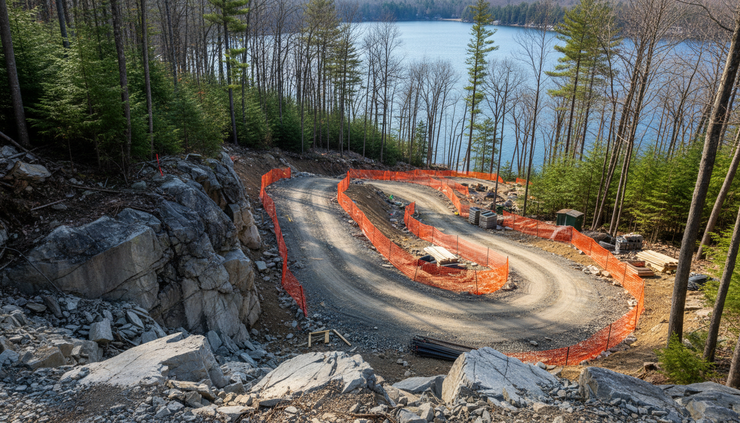
Review references and past projects with a critical eye
A portfolio can be beautiful and still fail to answer the most important question: what was the experience like for the homeowner?
Start by reviewing past projects that match your own in complexity. If you are planning a waterfront home with a steep driveway, shoreline work, a walkout lower level, and large glass openings, look for projects with similar site demands. A builder who has completed only flat-lot homes, even high-end ones, may not be the right fit.
When looking at photos, pay attention to more than finishes. Luxury homes often photograph well, but construction quality shows in the details.
Look for:
Clean transitions between materials
Thoughtful window alignment
Well-executed exterior trim and flashing
Consistent stone, siding, or woodwork
Outdoor spaces that feel connected to the home
Drainage solutions that are attractive and functional
Retaining walls, stairs, paths, and terraces that fit the site
If possible, ask to visit a completed home or an active job site. A finished home shows craft. An active site shows process.
On a well-run job site, materials are protected, access is managed, and the work area has a sense of order. Custom construction is never spotless, but it should not feel chaotic. The superintendent should know what is happening that week, which trades are on site, and what decisions are coming next.
References are just as valuable as the portfolio. Ask for recent clients, not only the happiest long-term contacts. When speaking with references, focus on the working relationship.
Good questions include:
Did the builder communicate consistently?
Were budget changes explained clearly?
Did the schedule feel realistic?
How did the builder handle problems?
Were you surprised by any major costs?
Would you hire the builder again?
What do you wish you had known before starting?
Listen for patterns. One delayed item may not mean much, especially in custom construction. Repeated comments about poor communication, unclear billing, or unresolved punch-list items deserve attention.
Also ask about the end of the project. Some builders are strong at starting homes but less organized during closeout. A luxury home should finish with careful follow-through, including final inspections, warranty information, manuals, product details, and a clear process for addressing post-move-in items.
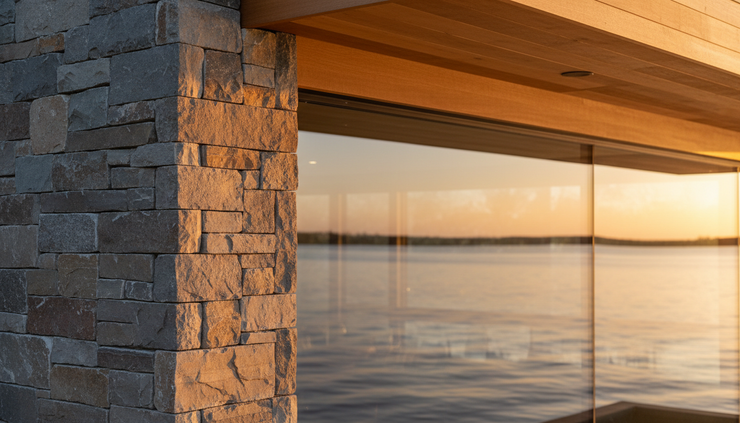
Make sure communication and vision are aligned
The best luxury homes come from a clear shared vision. The homeowner, builder, architect, and design team do not need to agree on every detail instantly, but they do need a common understanding of priorities.
For a waterfront home, those priorities might include:
Preserving the best view corridors
Creating easy movement between indoor and outdoor spaces
Keeping the home low and natural on the site
Maximizing privacy from neighboring properties or boat traffic
Designing for year-round use
Making maintenance manageable in wet, windy, or exposed conditions
Protecting trees, shoreline areas, or natural features
A builder should be able to translate those goals into practical construction decisions. If the owner wants large glass walls facing the water, the builder should be ready to discuss structure, energy performance, shading, cost, lead times, and installation needs. If the owner wants a terrace close to the shoreline, the builder should know that permitting and setbacks may affect what is possible.
Strong communication also means the builder is willing to say no or offer a better path when needed. Luxury construction includes many choices, and not every beautiful idea is buildable, durable, or worth the cost on a specific site.
Set communication expectations early. Ask who your main contact will be. Ask how often you will receive updates. Find out whether meetings will happen weekly, biweekly, or at key project milestones. Clarify how selections will be approved and how decisions will be documented.
A good communication process reduces stress because it creates fewer unknowns. It also protects the budget and schedule. Delayed decisions on windows, appliances, cabinets, tile, lighting, or exterior materials can slow the project even when the construction team is ready.
For large custom homes, alignment should begin before construction starts. Preconstruction is the time to connect the design intent with real pricing, site conditions, permitting needs, and construction sequence. When this step is rushed, the project often pays for it later.
Understand the budget and timeline before you build
Luxury waterfront projects are often more expensive and time-sensitive than homeowners first expect. That does not mean they need to feel unpredictable. The key is building a budget and timeline around real conditions, not wishful thinking.
A responsible builder should explain what is included in the estimate, what is not included, and which items are allowances. Allowances are common in custom building because certain selections may not be final at the start. The risk comes when allowances are too low for the homeowner’s actual taste and expectations.
For example, a luxury home budget should realistically account for premium windows, custom millwork, high-performance mechanical systems, specialty exterior materials, stonework, complex foundations, outdoor living areas, and landscape restoration. On waterfront sites, the budget may also need to include erosion control, access improvements, shoreline protection, retaining walls, drainage systems, or specialized equipment.
Ask the builder to identify the biggest cost drivers in your project. This helps you make informed choices before construction begins.
Common cost drivers include:
Site access and excavation
Foundation complexity
Slope stabilization
Structural steel or large openings
Window and door packages
Exterior materials
Mechanical and smart home systems
Custom cabinetry and millwork
Outdoor living spaces
Utility connections, septic, or well requirements
The timeline should receive the same level of attention. Permitting can take longer on waterfront properties, especially when shoreline, steep slope, environmental, or flood-related reviews are involved. Material lead times can also affect the schedule. Custom windows, specialty doors, appliances, stone, cabinetry, and fixtures may need to be selected early.
A builder cannot control every delay, but they can plan for known risks. That planning should include realistic milestones, clear decision deadlines, and regular updates when conditions change.
The cheapest estimate is rarely the safest choice for a luxury waterfront home. The better question is whether the estimate reflects the real scope, site conditions, and quality level you expect.
When comparing proposals, avoid looking only at the bottom line. Review the assumptions behind each number. One builder may include more complete sitework, better materials, or a more realistic allowance package. Another may appear less expensive because major items are missing or understated.
A clear budget builds trust. It also helps the homeowner decide where to invest and where to simplify without weakening the design.
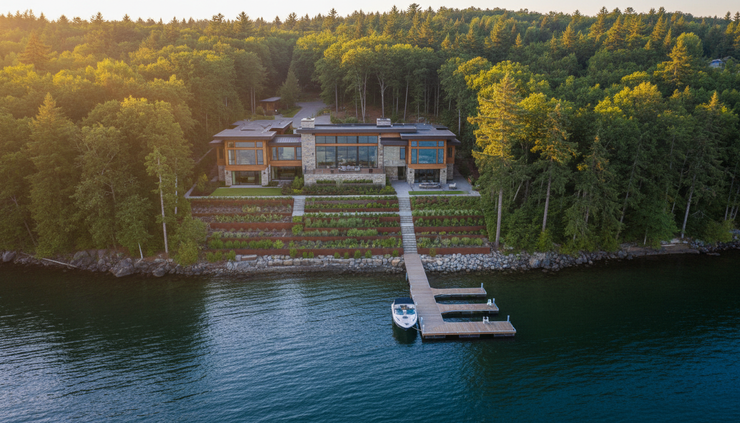
Make the final choice with confidence
Choosing the right builder is not about finding the biggest portfolio or the lowest bid. It is about finding the team best suited to your site, your goals, your budget, and the way you want to work.
For waterfront projects, that means looking closely at experience with local ordinances, shoreline rules, steep-slope conditions, permitting processes, and site-specific construction challenges. It also means choosing a builder who can protect the design vision while managing real-world constraints.
Before signing an agreement, take time to review credentials, speak with references, study past work, and ask direct questions about budget and schedule. Pay attention to how the builder communicates during the selection process. Clear answers, organized follow-up, and honest guidance are strong signs of what the construction experience will feel like.
A luxury waterfront home should feel effortless when it is finished. Getting there takes careful planning, skilled construction, and a builder who understands both the home and the land beneath it.


Comments