Renovate or Rebuild? A Homeowner’s Guide to Choosing the Best Path

A house can be full of memories and still fail the way people live today. The kitchen may be boxed in. The foundation may have shifted. The roofline may limit any realistic addition. Or the home may simply feel tired beside newer properties on the same street.
That is when the big question appears: should you renovate the existing home, or tear it down and rebuild?
The right answer depends on more than taste. Budget, structural condition, zoning rules, resale value, timeline, lifestyle, and emotional attachment all matter. For many homeowners, the smartest choice is not the most dramatic one. It is the path that creates the best home without wasting money on problems that should have been solved from the ground up.

Start with the condition of the home
Before comparing finishes, floor plans, and dream kitchens, look at the physical condition of the house. A cosmetic renovation is very different from repairing the core systems of a failing structure.
A home that needs new flooring, updated cabinets, better lighting, and fresh bathrooms may be a strong renovation candidate. A home with major foundation movement, widespread water damage, outdated wiring, asbestos, poor framing, or a roof structure that cannot support additions may push the decision toward rebuilding.
A thorough assessment should include:
Foundation and framing
Look for sloping floors, large cracks, sticking doors, sagging rooflines, and signs of long-term movement.
Roof and exterior envelope
Check the age of the roof, flashing, siding, windows, and doors. Water intrusion often hides behind walls long before it becomes obvious.
Electrical, plumbing, and HVAC
Older systems can be expensive to bring up to current code, especially if walls and ceilings must be opened.
Moisture and mold risks
Waterfront homes, homes in humid climates, and houses with poor drainage need extra attention.
Layout limits
Some homes can be opened up easily. Others have load-bearing walls, low ceiling heights, or awkward additions that make changes costly.
Site constraints
Setbacks, floodplain rules, septic systems, tree protections, and neighborhood restrictions can affect both renovation and rebuilding.
A licensed home inspector, structural engineer, architect, or experienced builder can help separate visible issues from serious hidden problems. This is money well spent. A house that looks worn may be structurally sound. A house that looks charming may need work behind every wall.
The key question is not “Can this house be renovated?” Most houses can. The better question is “Does renovating this house make financial and practical sense?”
Compare renovation and rebuilding clearly
Renovation keeps some or all of the existing structure. Rebuilding usually means demolishing the current home and constructing a new one on the same lot. Each choice has strengths and trade-offs.
Renovating can cost less when the structure is sound. You may keep the foundation, framing, roofline, utility connections, and parts of the interior.
Renovating preserves character. Original woodwork, stone fireplaces, mature landscaping, and neighborhood scale can remain.
Renovating may be faster for smaller projects. A kitchen update or main-floor remodel can often happen in stages.
Renovating can uncover surprises. Old wiring, rot, termite damage, and undersized beams can raise costs quickly.
Renovating may be limited by the existing footprint. Ceiling heights, stair locations, and bearing walls can restrict the design.
Rebuilding gives you a clean slate. You can design the layout, structure, energy systems, roofline, and exterior from scratch.
Rebuilding solves deep problems at once. Poor foundations, outdated layouts, moisture damage, and inefficient systems do not need to be worked around.
Rebuilding can be more predictable once plans are approved. There are fewer surprises hidden inside old walls.
Rebuilding usually requires moving out. Demolition, permitting, financing, and full construction take time.
Rebuilding can trigger stricter rules. Current zoning, coastal building codes, flood elevation requirements, and permit reviews may apply.
Renovation works best when the existing home has good bones and the desired changes fit within its structure. Rebuilding works best when the existing structure fights the plan at every step.
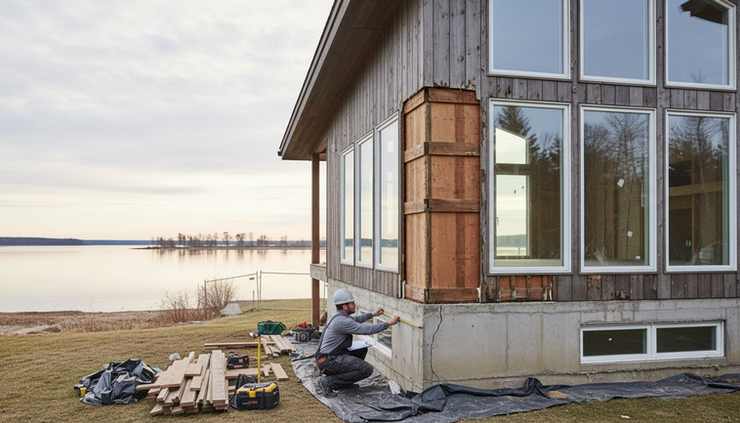
For example, a 1970s ranch near a lake might be a good renovation candidate if the slab is solid, the roof can be extended, and the owners mostly want an open kitchen, better windows, and updated bathrooms. The same home may become a rebuild candidate if it sits too low for flood rules, has poor drainage, and needs a second story that the foundation cannot support.
Weigh budget, resale value, and daily life
Cost is often the deciding factor, but the low initial estimate is not always the lowest final cost. A renovation can begin as the cheaper choice, then grow as hidden issues appear. A rebuild can look expensive upfront, yet produce a more efficient, durable, and valuable home over time.
Set a realistic budget range
For renovation, include a contingency for unknowns. Older homes often need extra work once demolition starts. Even simple changes can affect plumbing, wiring, insulation, drywall, and flooring.
For rebuilding, budget beyond the house itself. Demolition, design fees, engineering, permits, utility work, temporary housing, landscaping, driveways, drainage, and insurance can add up. In coastal or waterfront areas, flood-zone requirements and erosion controls may also affect cost.
A useful planning approach is to price three scenarios:
Repair and refresh
Keep the layout mostly the same and update finishes, systems, and repairs.
Major renovation
Rework the layout, open walls, add space, and upgrade major systems.
Full rebuild
Demolish the existing home and build new within current rules.
If the major renovation estimate comes close to a rebuild, compare the long-term result carefully. Spending nearly the same amount to keep a compromised structure may not be the best value.
Study the property value
The lot often drives the decision. In desirable areas, especially near water, a dated home may sit on a property that could support a much better house. A rebuild can make sense when the land value is high and nearby homes have already been improved.
Look at comparable homes, but do not rely only on listing prices. Talk with local real estate agents, builders, or appraisers who understand the neighborhood. Ask:
What are renovated homes selling for nearby?
What are newer homes selling for nearby?
Are buyers in the area paying more for modern layouts, energy efficiency, and storm-resistant construction?
Would overbuilding create a home that is hard to resell?
Does the current house have historic, architectural, or character value that buyers would appreciate?
This is general information, not financial advice. A local real estate professional can help estimate value in a specific market.
Think about how life will change during the project
A small renovation may allow you to stay in the home. A major renovation can make daily life difficult, with dust, noise, missing bathrooms, temporary kitchens, and limited privacy.
A rebuild almost always means moving out, but the process may be cleaner emotionally. Instead of living inside a construction zone for months, you make decisions upfront and return to a finished home.
Personal preference matters here. Some people enjoy preserving a house piece by piece. Others would rather start fresh and avoid constant compromises.
Learn from common homeowner scenarios
Every project is different, but these composite examples show how the decision often plays out.
The waterfront cottage that needed more than charm
A couple owned a small waterfront cottage built decades ago. The view was beautiful, and the home had sentimental value. At first, they planned to renovate the kitchen, add a primary suite, and replace the windows.
The inspection changed the plan. The foundation showed signs of settlement, the crawl space had moisture problems, and the electrical system needed major work. The home also sat lower than current recommended flood elevations for the area.
A renovation was possible, but the cost kept rising. The couple chose to rebuild a compact, modern home on the same lot with better elevation, larger windows, durable exterior materials, and an open main floor facing the water.
The rebuild cost more upfront, but it solved the biggest risks at once. The owners kept the setting they loved while gaining a safer and more functional home.

The midcentury home with strong bones
Another homeowner bought a midcentury single-story home in an established neighborhood. The kitchen was closed off, the bathrooms were dated, and the windows were inefficient. Still, the foundation was solid, the roof framing was in good condition, and the home had original wood ceilings worth saving.
In this case, renovation made sense. The owner opened the kitchen to the living area, replaced the windows, upgraded insulation, added efficient HVAC, and restored the original ceiling detail. The project preserved the character that made the house special.
A rebuild would have erased the best parts of the home and cost more than the neighborhood values supported. Renovation delivered a better return and a more personal result.
The addition that became too complicated
A family wanted more bedrooms, a larger kitchen, and better indoor-outdoor space. Their plan started as a large addition. During early design, the builder found that the existing roofline, foundation, and stair placement would force expensive structural changes.
Each new idea created another workaround. The addition would solve some problems but leave low ceilings, narrow hallways, and an awkward split-level layout.
After comparing costs, the family chose to rebuild. The new plan fit the lot better, improved natural light, and placed bedrooms, storage, and living areas where they made sense. The lesson was simple: when a renovation becomes a chain of compromises, rebuilding may be the cleaner path.
Use a practical decision checklist
A clear process can make the choice less emotional. Before committing to either path, gather the right information and compare options side by side.
Bring in the right professionals early
Start with a home inspector or structural engineer if the property has cracks, sloping floors, water damage, or major age-related issues. Bring in a builder or architect once you know the home’s physical condition.
For waterfront or coastal properties, ask about flood elevation, drainage, wind requirements, and permitting. These rules can affect both renovation and rebuilding.
Define the real goal
Write down what the project must accomplish. Be specific.
More bedrooms
A larger kitchen
Better views
Safer structure
Aging-in-place features
Rental potential
Better energy performance
More natural light
Stronger connection to outdoor space
Then ask whether the existing home can meet those goals without forcing awkward compromises.
Compare total value, not just construction cost
A cheaper renovation may not be better if it leaves major systems near the end of their life. A rebuild may not be better if the new home would exceed the neighborhood’s value range.
Compare:
Project cost
Expected maintenance after completion
Energy efficiency
Insurance considerations
Resale appeal
Design flexibility
Timeline
Stress and disruption
Long-term comfort
Watch for red flags
Renovation may be the wrong path when:
The foundation needs major repair
Water damage is widespread
The layout cannot support the desired changes
Ceiling heights are too low to fix reasonably
Major systems all need replacement
The renovation cost approaches the rebuild cost
Code upgrades would require extensive hidden work
Rebuilding may be the wrong path when:
The existing home has strong structure and valuable character
Local rules make a new home smaller or less desirable
The budget cannot cover demolition, design, permits, and temporary housing
The neighborhood does not support the finished value
A targeted renovation would solve the main problems

Choose the path that fits the house and the future
The decision to renovate or rebuild is part financial, part practical, and part personal. A renovation can protect character, reduce waste, and make a good home work better. A rebuild can remove years of hidden problems and create a home designed for the way people live now.
The best choice usually becomes clear after a careful assessment. If the home has solid bones, a workable layout, and features worth preserving, renovation may be the smartest path. If the structure is failing, the layout fights every goal, or the cost of repairs comes too close to new construction, rebuilding may offer better long-term value.
Start with the facts. Inspect the structure, price realistic options, check local rules, and compare the finished result. Then choose the path that gives the home, the property, and the people living there the strongest future.


Comments